Claude Was Down on April 15. Here's the Full Story.
30,000 people reported it broken before Anthropic finished fixing it.
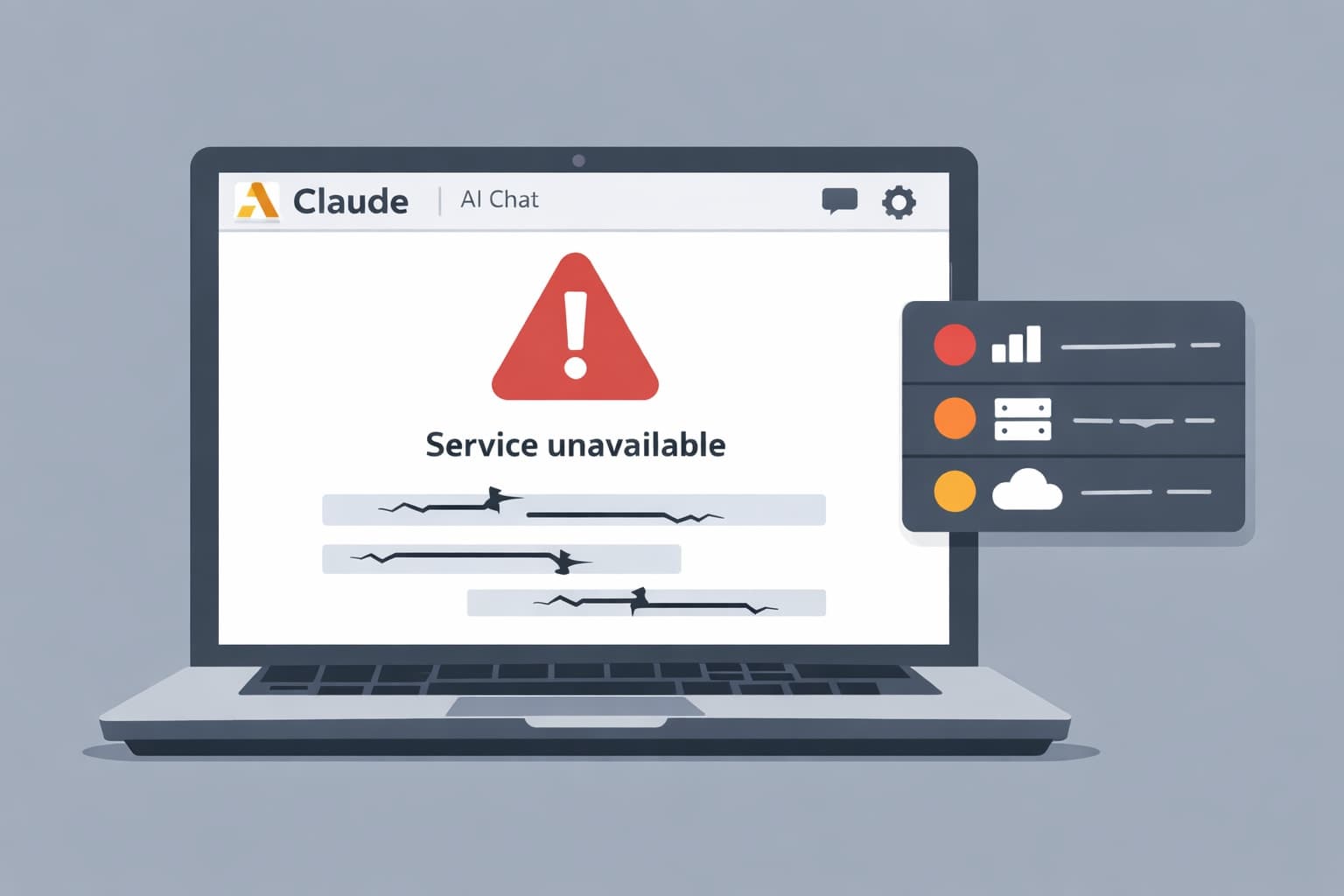
Yesterday — April 15, 2026 — Claude had one of its worst outages in months. It started at 10:53 AM ET. By the time everything resolved at 1:42 PM ET, the number of Downdetector reports had crossed 30,000. The status page was showing "Major Outage." And if you were one of the people who tried logging in during those three hours, you either got a dead screen, a fake "you've hit your daily limit" message when you hadn't sent a single prompt, or a verification code the website silently ate and forgot.
This wasn't a one-off. It's the fifth significant disruption in two weeks.
What broke, and when
The timeline matters because it explains why so many people were confused.
10:53 AM ET — Anthropic confirms elevated errors across Claude.ai, the API, and Claude Code. A fix gets pushed within ten minutes.
11:40 AM ET — The API recovers. The web app breaks worse. Status page reads: "Claude.ai and Platform are down. Login for Claude Code does not work via Claude.ai."
The two things failed independently. The inference engine — the part that actually runs Claude — came back first. But the authentication system, the part that issues and validates login codes, collapsed on its own schedule. Developers hitting the API directly were fine the whole time. Everyone trying to log into claude.ai was stuck in a loop.
The fake limit bug hit free users because the same broken auth layer handles usage tracking. It couldn't read your real count, defaulted to "limit reached," and blocked you from an account you hadn't touched that day. Your actual count was untouched — once service restored, everything was exactly where you left it.
1:42 PM ET — Full incident resolved. Total downtime: 2 hours and 13 minutes.
This isn't a one-time thing
April 6. April 10. April 13. April 14 (warning-level). April 15. That's five incidents in ten days.
StatusGator, which has been tracking Claude since October 2025, puts April on pace to be the worst month for uptime since they started monitoring. The Register reported on April 13 that GitHub issues against Claude Code hit 20+ new reports in 13 days — already ahead of March's 18, which was itself a 3.5x jump over the January–February baseline.
Some of that GitHub noise is AI-generated (open source maintainers have been complaining about bot-filed issues for months). But the pattern is real enough that Claude itself, when asked to analyze the trend, said "yes, quality complaints have escalated sharply." That's a strange sentence to read.
Anthropic hasn't published a detailed post-mortem. The status page updates during incidents are clear and timely — Anthropic typically acknowledges within 15–30 minutes — but the root cause explanations after the fact have been minimal. That matters for teams trying to decide how much to depend on this infrastructure.
Three things to do before the next one
1. Bookmark status.claude.com directly. Not a third-party tracker. Downdetector and StatusGator are useful for seeing that something is wrong, but they lag behind the official page by 15–30 minutes. When you're mid-work and things go sideways, the official page is where Anthropic posts real updates in real time.
2. If you're building on the API, add exponential backoff. Most 529 errors during degraded periods clear within 30 seconds. Start with a 1-second wait, double it each retry, cap at 60 seconds. That handles most transient failures without manual intervention.
3. Don't panic about the fake limit message. During authentication outages, the system misfires and shows usage errors that aren't real. Wait for the incident to resolve — your account resets correctly on its own.
The harder question is whether a pattern like this changes how much you rely on Claude for work that actually needs to get done on a deadline. Probably not yet. The outages are measured in hours, not days. But "generally reliable" is doing a lot of work in that sentence, and if the April trend continues into May, more people are going to start asking it seriously.


Comments (0)
Sign in to join the conversation.
No comments yet. Be the first to share your thoughts.